When it comes to seeing fine art or folk crafts in Sicily, you will be amazed at the variety all around you. Sicily, the largest island in the Mediterranean, is a vibrant canvas of artistic expression where history, culture, and creativity converge.
Sicilians, like all italians, are highly artistic. They start learning art appreciation as a subject in primary school, and have secondary schools devoted specifically to the study of art, so it’s probably not surprising. From its ancient temples to its bustling markets, the island boasts an impressive array of fine art and folk traditions that reflect its rich heritage.
Sacred Spaces: Fine Art in Churches and Cathedrals
The main way to see historic art from the Medieval period, Renaissance and Baroque periods is by visiting the literally thousands of churches, which are all free art galleries packed with works by highly important and famous artists.
Sicily’s churches and cathedrals are a testament to the island’s historical and artistic legacy. The Cathedral of Monreale, a UNESCO World Heritage Site, is renowned for its stunning Byzantine mosaics, depicting biblical scenes that shimmer in gold.
Palermo’s churches and cathedrals are a treasure trove of fine art, showcasing masterpieces that reflect the city’s rich history. The Palermo Cathedral, a UNESCO World Heritage Site, features stunning baroque chapels adorned with intricate frescoes and sculptures. Notably, the Church of San Cataldo boasts exquisite Arabic-Norman architecture, while Santa Maria dell’Ammiraglio, also known as the Martorana, is famous for its stunning Byzantine mosaics that dazzle with gold and vibrant colors.
As you wander through these sacred spaces, take a moment to appreciate the artistry of the Neapolitan painter Giacomo Serpotta, whose work in the Church of the Gesù is a prime example of Sicilian Baroque sculpture.
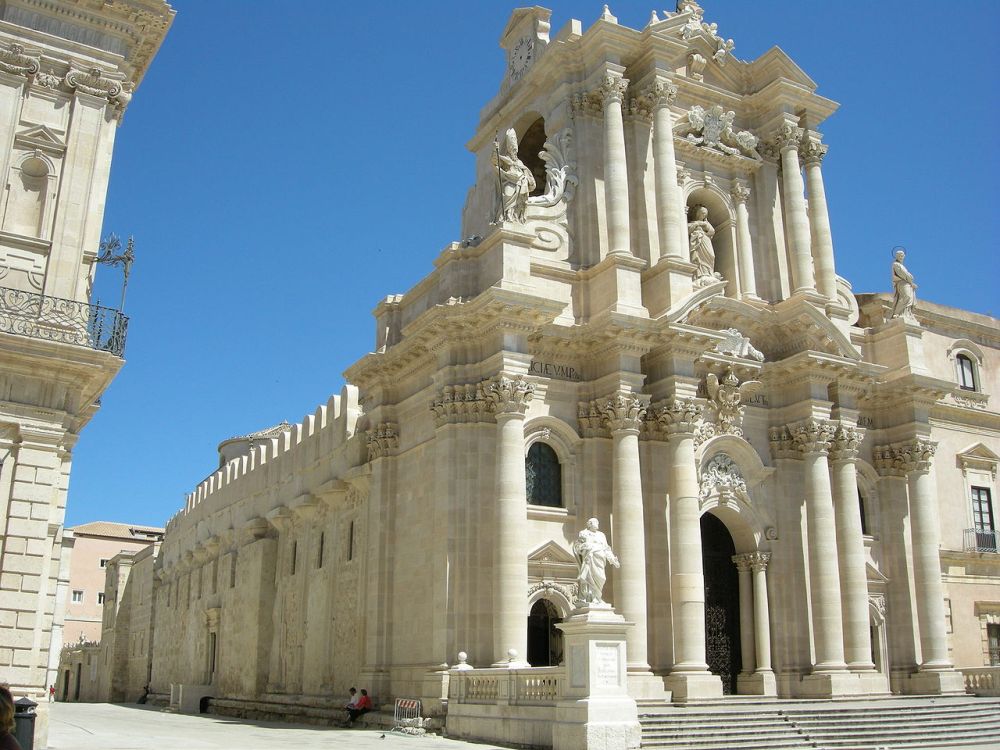
Catania’s Cathedral stands out for its blend of baroque and neoclassical styles.
The artistry of the Catania Cathedral, dedicated to St. Agatha, is particularly striking, with its opulent altars and frescoes that celebrate both the divine and local culture.
Cathedrals in Sicily
Read about:
Statues and Public Art: Voices of the Island
Throughout Sicily, public statues and monuments narrate the island’s storied past.
In Catania, the Fontana dell’Elefante, featuring an elephant made of lava stone, is a beloved symbol of the city. Meanwhile, Taormina’s ancient Greek Theatre offers breathtaking views and a glimpse into the island’s Hellenistic roots, enhanced by nearby sculptures that evoke the spirit of ancient drama.
Strolling through Palermo, you’ll encounter a multitude of public statues that tell the stories of its past. One of the most iconic is The Fountain of Shame, or Fontana Pretoria, adorned with statues of mythological figures. This stunning fountain is a focal point of Piazza Pretoria and reflects the artistic prowess of its creators. Another must-see is Piazza Verdi, home to the impressive Teatro Massimo, where the surrounding statues pay homage to the city’s rich cultural heritage.
Majolica Ceramics: A Splash of Color
Sicilian majolica ceramics are celebrated for their vibrant colors and intricate designs, often depicting traditional motifs like lemons and floral patterns. In ceramics shops you will see traditional patterns and motifs painted on all manner of ceramic objects. The coloured glazes and the firing skills to make these dazzling ceramics were brought to Sicily my the Moors in the 11th century and have been refined gradually ever since.
Every town or region has its own unique style – the most prized ones are Caltagirone and Santo Stefano di Camastro. Both of these towns appear to have so many ceramic art shops that there’s no room for anything else! the two towns of Cefalù and Taormina – both delightful despite swarming with tourists – also have great numbers of beautiful ceramics shops.

Modern Art: A Contemporary Perspective
Sicily’s contemporary art scene is thriving, with a growing number of galleries and exhibitions that reflect modern themes and global influences. The Museo di Arte Contemporanea di Palermo (MACA) and Castello di Paternò offer platforms for both local and international artists, showcasing works that challenge perceptions and engage with pressing social issues.
Modern art also flourishes in Sicily, no more so than in the semi-derelict town of Favara. The modern art project there is a truly remarkable example of art involving the whole community to raise up a town so economically depressed its buildings are literaly crumbling to rubble.
There’s a modern art drive around the area of Castel di Tusa with modern sculptures dotted about the countryside. They were put there by the pampered and somewhat nutty heir to a construction business empire, who chose to step out of commerce and spend his inheritance sharing his taste in modern sculpture with residents of Sicily’s north coast. Vast amounts of cement are a recurring theme. People either love it or hate it: What’s the Use of Modern Art?
He also runs an art hotel, where each room is fully decorated with an art installation by a different Sicilian or Italian artist. You can tour the rooms even if you don’t stay in the hotel. One of the rooms was decorated by a pupeteer and has pieces of puppets, works in progress, all around the room to recreate the home he grew up in. Which brings me to…
Go and Watch a Puppet Show: The Sicilian tradition of the Pupi
A cornerstone of Sicilian folk art, the Pupi puppets represent a rich tradition of storytelling. These beautifully crafted marionettes, often dressed in elaborate costumes, perform tales rooted in chivalry and folklore.
In Sicilian tradition, the puppeteering families make puppets – called “Pupi” – and perform classic puppet shows with them. Each puppet is individual and hand made and becomes a beloved member of the puppeteer’s family, with a name and a character. Puppeteers don’t like selling their creations, as they are far more than simply artifacts. I once spoke to a man whose father had been puppeteer, who described having about 20 puppets in his bedroom as a child and regarding them all as brothers. When you see how the puppeteers bring them to life on stage, it’s easy to imagine! Sicilian puppets are about the size of 7 year old children and beautifully decorated.
You can see a stunning collection, along with traditional puppets from around the world, in the Palermo puppet museum.
The Opera dei Pupi (Puppet Theatre) can be experienced in various cities, including Palermo and Catania, where live performances bring Sicilian legends to life, enchanting audiences of all ages. You can also book tickets to watch a puppet show in some of the more touristy towns like Cefalú. Some shows are performed in English for tourists, but personally I think the Sicilian language performances are more atmospheric even if you don’t know what they are saying!
Carrozzi and Horses: Folk Art on the Move
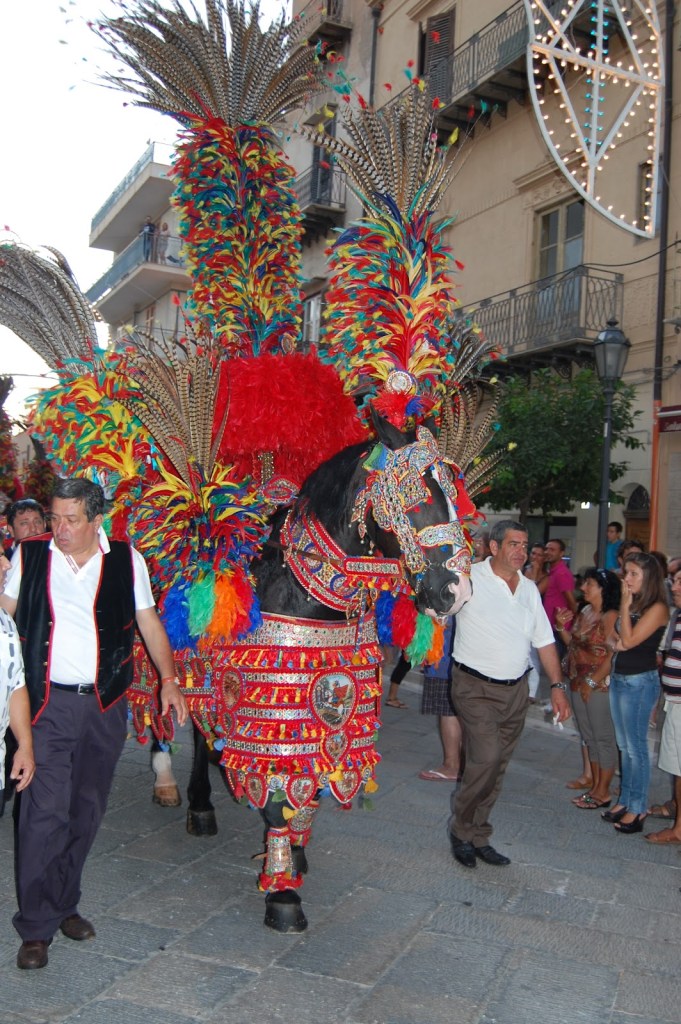
The tradition of carrozzzi, elaborately decorated carts, is a vibrant aspect of Sicilian folk art. Historically used for transporting goods, these colorful carts have become symbols of cultural pride. The art on these carts often illustrates local folklore and heroic tales, making them a focal point during festivals and parades across the island, especially in Palermo and Catania.
Renato Guttuso: Sicily’s Modern Master
Renato Guttuso was Sicily’s most famous 20th century artist. Among Sicily’s most celebrated artists, Renato Guttuso remains a pivotal figure. His works, deeply rooted in the social and political struggles of his time, often reflect the vibrancy and hardships of Sicilian life.
Guttuso’s masterpiece, “La Vucciria,” captures the essence of Palermo’s famous market, filled with life and color. This now hangs in Palermo and you’re not supposed to photograph it, but I did. I could probably become a spy, I was that sneaky about it.
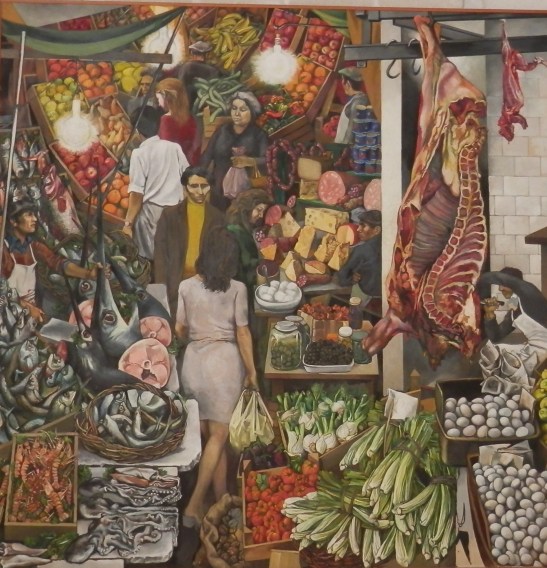
His legacy can be explored at the Guttuso Museum in Bagheria, where his emotive paintings are displayed alongside those of his contemporaries.
There is also a Renato Guttuso art gallery in my town, called Villa Cattolica, which is beautiful but so badly run I actually gave it the Disgraceful Management Award in 2014. The director stole numerous paintings which locls told me they saw hanging in her house. She got 2 million euros from the EU to run an exhibition, during which she removed the wheelchair access to the gallery and put up no publicity whatsoever (not even a sign on the gate) and the front gates are always locked: Through great persistence I discovered I could go to the side entrance and squeeze around the vehicle barrier. If you can put up with this outrage, the paintings are wonderful and make you realise that Renato Guttuso really ought to be much more famous than he actually is.
Historic Buildings: Art in the Walls
Villa Sant’Isidoro in Aspra
This recently opened villa has its original 17th century murals, and a decent collection of oil paintings including two 18th century paintings by Sicilian masters Pietro Novelli and Jusepe de Ribeira, who painted in the style of Caravaggio. You get a guided tour in English included in the modest entry price, and the entire building has an extraordinary and fascinating history.
Palazzo Dei Normanni, The Normal Palace in Palermo
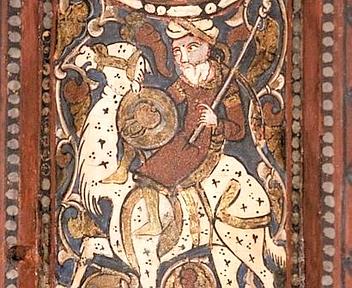
Not all the art is religious. The Normal Palace in Palermo houses a distinctly secular collection of images on the chapel ceiling. The chapel called the Capella Palatina is, in my opinion, the most beautiful thing in all Sicily. You literally CANNOT visit Sicily without seeing it.
Il Teatro Massimo – Palermo’s Vast Opera House
To celebrate Sicily becoming part of Italy, Palermo Council announced a competition in 1864 to design a new opera house for Palermo. The result is so fabulous, both inside and out, that you can have guided tours during the day even if you don’t fancy listening to the opera.
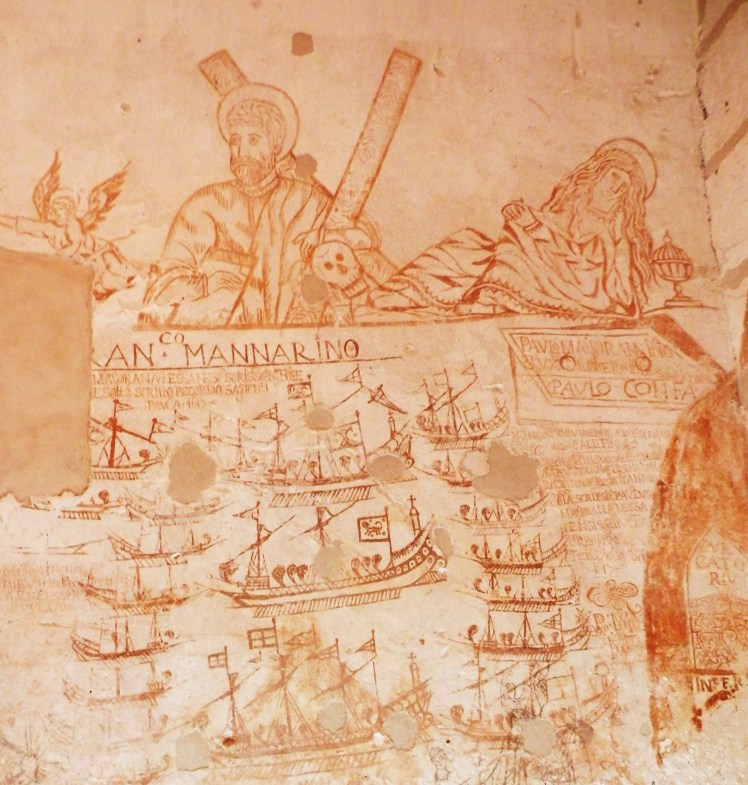
Palazzo Steri in Palermo: Art by Prisoners of the Inquisition
Palazzo Steri, in central Palermo, has been used for a great many different purposes over the centuries, and it still is. A large part of it was once the prison, filled with people who crossed paths with the Inquisition during the time of Spanish rule.
It is now open as a art gallery, in which you see the pictures scratched onto the walls in a dark stain which looks like blood as they waiting for thir lives to be prematurely ended. Their soul searching images, and the messages they wanted to be remembered for, make this an art gallery you will not forget.
Discover more from The Dangerously Truthful Diary of a Sicilian Housewife
Subscribe to get the latest posts sent to your email.
 The Dangerously Truthful Diary of a Sicilian Housewife
Yes, and not to forget the ancient art, e.g. in the famous mosaics in the Roman Villa Casale!
LikeLiked by 1 person
That’s a good point! I need to give the ancient art a blog post all of its own…
LikeLike
Thank you so much for this wonderful post. I have visited Sicily twice and been to several of the places you mentioned. There simply is no end to the art and beauty in Italy. It makes me proud to have Italian heritage (Campania and Sicily). Looking forward to future posts.
LikeLike
I’m so glad you enjoyed it 😃
LikeLike